Blog
New
Rethinking Drug Discovery
Rethinking Drug Discovery

Barkha Pradhan
5 Min Read
Share
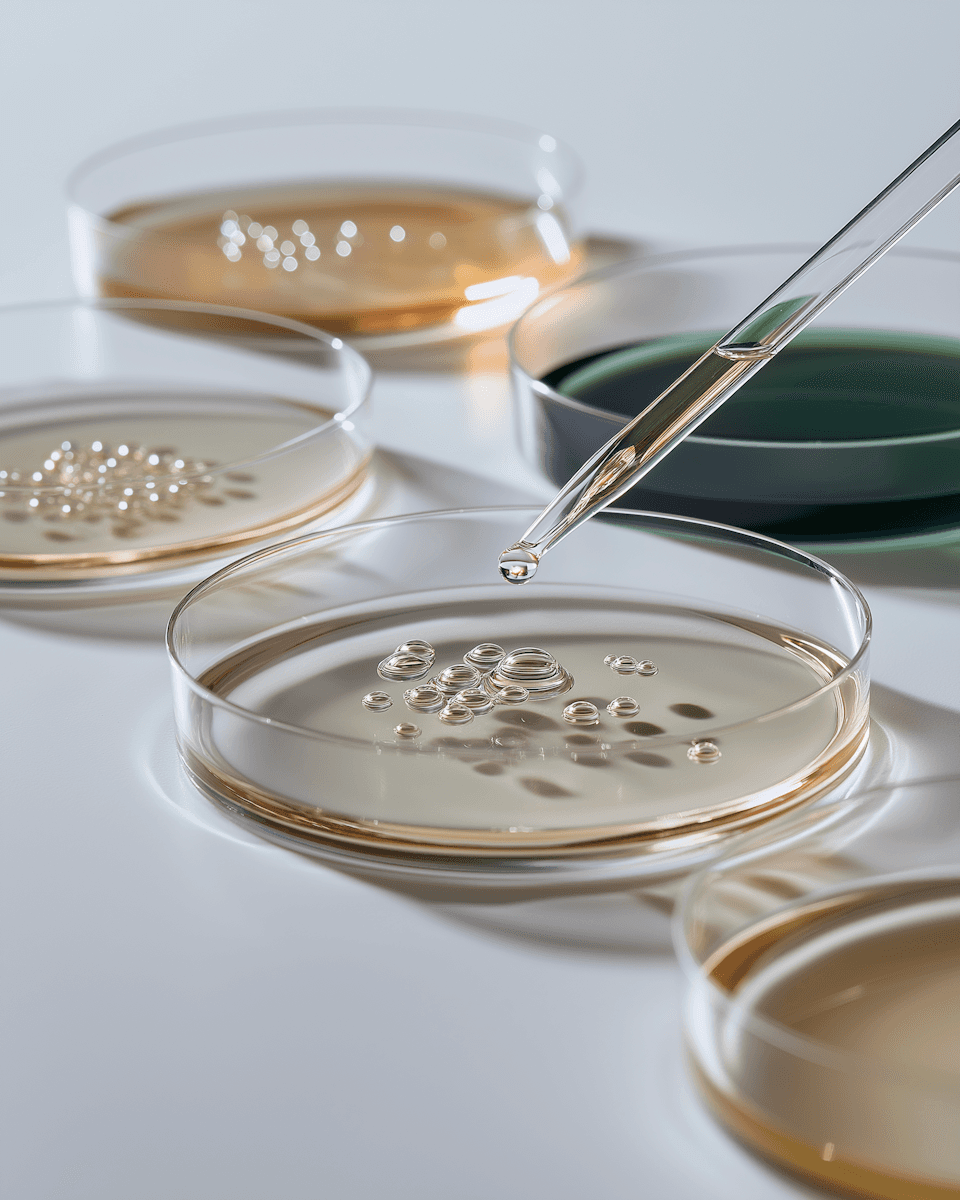
Understanding Reproductive Genetics.
Discovering a new drug is like finding a needle in a haystack. It's exciting, but it's also expensive, slow, and sometimes ethically complicated. What if we could make this process faster, cheaper, and more efficient, with fewer animals involved?
At Algorithmic Biologics (AlgoBio), we're doing exactly that with Tapestry, our high-throughput screening platform designed to speed up drug discovery while keeping costs and ethical concerns in check.
Available Genetic Approaches
Drug discovery is the process of identifying new compounds that can treat diseases. It typically starts with thousands of molecules being tested to see how they interact with cells, proteins, or organisms. Most of these compounds go nowhere, but a few promising ones move forward for further testing.
How Diagnostic Assays Are Traditionally Designed
Traditionally, drug screening happens in labs where:
Each compound is tested individually on cells or animals.
DNA or RNA is extracted and sequenced to observe cellular responses
A huge number of samples are processed separately
Animals are used repeatedly to test multiple drugs
This results in:
High costs for sequencing and sample prep
Large number of barcodes needed for sequencing
High use of animals, leading to ethical and regulatory burdens
Massive data, often hard to manage and slow to analyze
Where Traditional Assay Design Struggles at Scale
Despite technological advances, major bottlenecks remain:
Scale and cost: Testing hundreds of compounds means preparing hundreds of libraries and performing deep sequencing for each, very resource intensive.
Ethics: Using many animals for testing increases regulatory complexities.
Data overload: More samples = more data = longer analysis times.
Speed: Drug discovery still takes years to reach clinical trials.
How Computational Assay Design Changes the Workflow
Tapestry applies principles of molecular compression and smart pooling to completely reimagine how drug screening is done.
What This Looks Like in Practice
For High-Throughput Sequencing:
Instead of preparing a library for each well, Tapestry uses combinatorial pooling to reduce the number of samples.
This means fewer barcodes, fewer libraries, and less sequencing coverage without losing signal quality.
Result: 25–30% reduction in sequencing cost and effort.
Why This Matters for Scalable Diagnostics
Tapestry compresses multiple drug molecules into a smart pooled design that allows significantly fewer animals to be used for testing, without compromising on accuracy.
Each animal receives a unique combination of drugs.
Using advanced decoding algorithms, we can accurately determine which drug caused which response.
Result: 60% reduction in animal usage, faster results, and greater consistency.
Why It Matters
Cost-effective drug screening
Faster decision-making in preclinical research
Ethical testing with fewer animals
Scalable platform for biotech and pharma companies aiming to test hundreds of molecules without breaking the bank
Conclusion: A Better Way to Discover Drugs
Drug discovery doesn't need to be painfully slow, expensive, or ethically taxing. With Tapestry, we're bringing intelligent design to experimental biology, saving time, money, and lives.
At AlgoBio, we're not just accelerating science. We're making it smarter, kinder, and more accessible.
More Article

Understanding Reproductive Genetics.
Discovering a new drug is like finding a needle in a haystack. It's exciting, but it's also expensive, slow, and sometimes ethically complicated. What if we could make this process faster, cheaper, and more efficient, with fewer animals involved?
At Algorithmic Biologics (AlgoBio), we're doing exactly that with Tapestry, our high-throughput screening platform designed to speed up drug discovery while keeping costs and ethical concerns in check.
Available Genetic Approaches
Drug discovery is the process of identifying new compounds that can treat diseases. It typically starts with thousands of molecules being tested to see how they interact with cells, proteins, or organisms. Most of these compounds go nowhere, but a few promising ones move forward for further testing.
How Diagnostic Assays Are Traditionally Designed
Traditionally, drug screening happens in labs where:
Each compound is tested individually on cells or animals.
DNA or RNA is extracted and sequenced to observe cellular responses
A huge number of samples are processed separately
Animals are used repeatedly to test multiple drugs
This results in:
High costs for sequencing and sample prep
Large number of barcodes needed for sequencing
High use of animals, leading to ethical and regulatory burdens
Massive data, often hard to manage and slow to analyze
Where Traditional Assay Design Struggles at Scale
Despite technological advances, major bottlenecks remain:
Scale and cost: Testing hundreds of compounds means preparing hundreds of libraries and performing deep sequencing for each, very resource intensive.
Ethics: Using many animals for testing increases regulatory complexities.
Data overload: More samples = more data = longer analysis times.
Speed: Drug discovery still takes years to reach clinical trials.
How Computational Assay Design Changes the Workflow
Tapestry applies principles of molecular compression and smart pooling to completely reimagine how drug screening is done.
What This Looks Like in Practice
For High-Throughput Sequencing:
Instead of preparing a library for each well, Tapestry uses combinatorial pooling to reduce the number of samples.
This means fewer barcodes, fewer libraries, and less sequencing coverage without losing signal quality.
Result: 25–30% reduction in sequencing cost and effort.
Why This Matters for Scalable Diagnostics
Tapestry compresses multiple drug molecules into a smart pooled design that allows significantly fewer animals to be used for testing, without compromising on accuracy.
Each animal receives a unique combination of drugs.
Using advanced decoding algorithms, we can accurately determine which drug caused which response.
Result: 60% reduction in animal usage, faster results, and greater consistency.
Why It Matters
Cost-effective drug screening
Faster decision-making in preclinical research
Ethical testing with fewer animals
Scalable platform for biotech and pharma companies aiming to test hundreds of molecules without breaking the bank
Conclusion: A Better Way to Discover Drugs
Drug discovery doesn't need to be painfully slow, expensive, or ethically taxing. With Tapestry, we're bringing intelligent design to experimental biology, saving time, money, and lives.
At AlgoBio, we're not just accelerating science. We're making it smarter, kinder, and more accessible.
More Article
Understanding Reproductive Genetics.
Discovering a new drug is like finding a needle in a haystack. It's exciting, but it's also expensive, slow, and sometimes ethically complicated. What if we could make this process faster, cheaper, and more efficient, with fewer animals involved?
At Algorithmic Biologics (AlgoBio), we're doing exactly that with Tapestry, our high-throughput screening platform designed to speed up drug discovery while keeping costs and ethical concerns in check.
Available Genetic Approaches
Drug discovery is the process of identifying new compounds that can treat diseases. It typically starts with thousands of molecules being tested to see how they interact with cells, proteins, or organisms. Most of these compounds go nowhere, but a few promising ones move forward for further testing.
How Diagnostic Assays Are Traditionally Designed
Traditionally, drug screening happens in labs where:
Each compound is tested individually on cells or animals.
DNA or RNA is extracted and sequenced to observe cellular responses
A huge number of samples are processed separately
Animals are used repeatedly to test multiple drugs
This results in:
High costs for sequencing and sample prep
Large number of barcodes needed for sequencing
High use of animals, leading to ethical and regulatory burdens
Massive data, often hard to manage and slow to analyze
Where Traditional Assay Design Struggles at Scale
Despite technological advances, major bottlenecks remain:
Scale and cost: Testing hundreds of compounds means preparing hundreds of libraries and performing deep sequencing for each, very resource intensive.
Ethics: Using many animals for testing increases regulatory complexities.
Data overload: More samples = more data = longer analysis times.
Speed: Drug discovery still takes years to reach clinical trials.
How Computational Assay Design Changes the Workflow
Tapestry applies principles of molecular compression and smart pooling to completely reimagine how drug screening is done.
What This Looks Like in Practice
For High-Throughput Sequencing:
Instead of preparing a library for each well, Tapestry uses combinatorial pooling to reduce the number of samples.
This means fewer barcodes, fewer libraries, and less sequencing coverage without losing signal quality.
Result: 25–30% reduction in sequencing cost and effort.
Why This Matters for Scalable Diagnostics
Tapestry compresses multiple drug molecules into a smart pooled design that allows significantly fewer animals to be used for testing, without compromising on accuracy.
Each animal receives a unique combination of drugs.
Using advanced decoding algorithms, we can accurately determine which drug caused which response.
Result: 60% reduction in animal usage, faster results, and greater consistency.
Why It Matters
Cost-effective drug screening
Faster decision-making in preclinical research
Ethical testing with fewer animals
Scalable platform for biotech and pharma companies aiming to test hundreds of molecules without breaking the bank
Conclusion: A Better Way to Discover Drugs
Drug discovery doesn't need to be painfully slow, expensive, or ethically taxing. With Tapestry, we're bringing intelligent design to experimental biology, saving time, money, and lives.
At AlgoBio, we're not just accelerating science. We're making it smarter, kinder, and more accessible.